
An Introduction

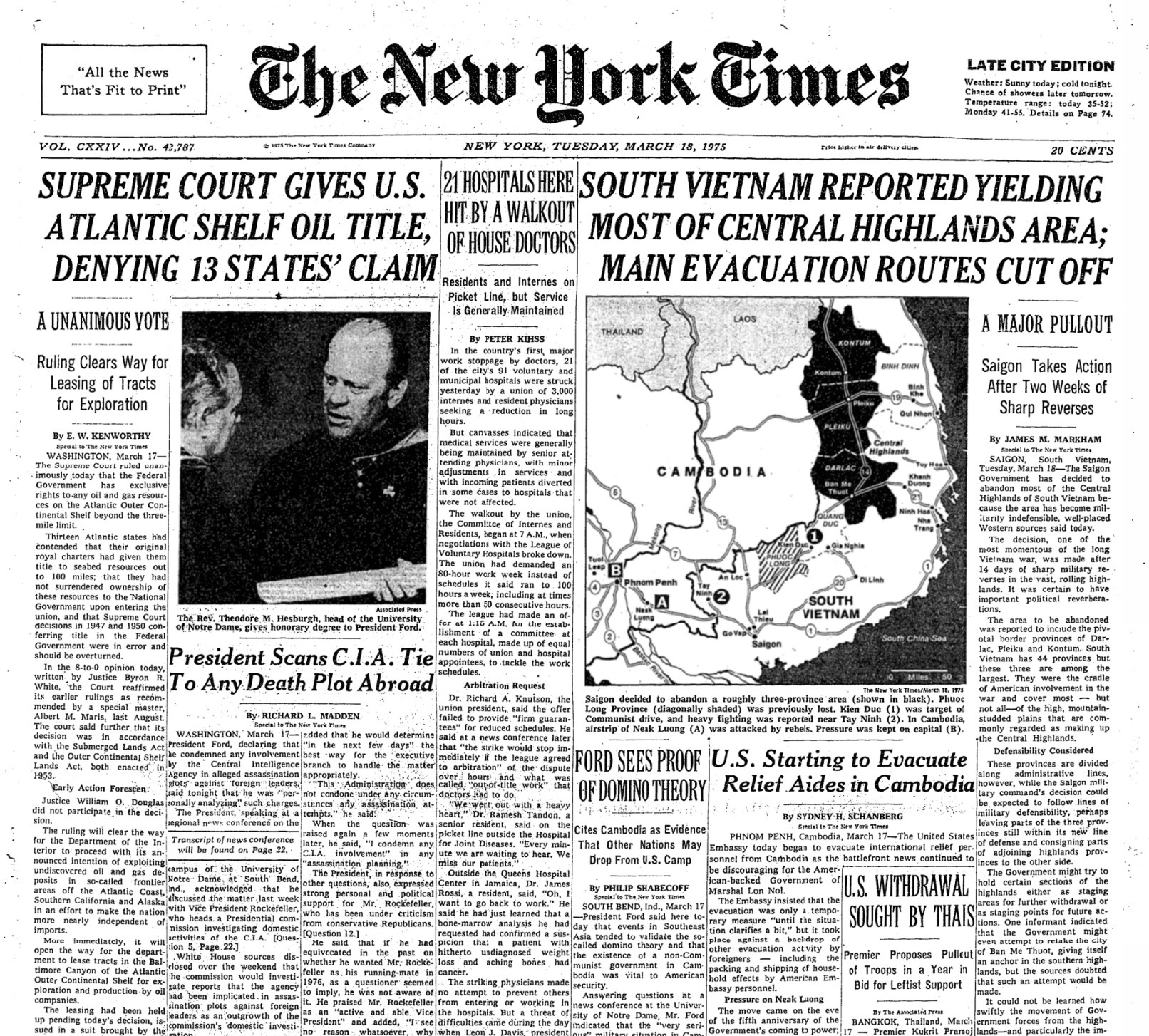
It is March 18th, 1975: the Vietnam War is a month away from officially ending, Towering Inferno is top of the Box Office Charts, and like every Tuesday night you tune into CBS to watch your favorite evening TV shows. Only tonight is the season finale of the 3rd season of M*A*S*H, and it is an episode that will drastically change the course of the series; an episode that will touch its viewers so deeply that it will stay with them for decades after. Or, as my mom puts it, one that “impacted a generation.”
Needless to say, heavy spoilers ahead for the episode and the show.


Season 3, episode 24, “Abyssinia Henry” aired at 8:30pm on Tuesday March 18th, 1975. The episode followed the M*A*S*H crew bidding a fond farewell to lovable Lieutenant Colonel Henry Blake, who had finally received his long-awaited discharge. Over the course of 3 critically acclaimed seasons, M*A*S*H carved a place for itself in the weekly rituals of millions of Americans. Many of these viewers were children, who watched such shows as M*A*S*H, Happy Days, and All in the Family, alongside their parents and older siblings. The characters they saw weekly on the TV became not only a part of their routine, but members of the family. Grandparents, cousins, aunts and uncles– most children see such relatives a few times a year at holidays and family gatherings; but Hawkeye, Trapper, Margaret, Radar, Klinger, Frank, Father Mulcahy, and of course Colonel Blake–they were in your home, laughing along with you and your loved ones, weekly.
But again, tonight’s episode is different.
A tearfully fond farewell to Henry at the chopper pad is followed by the episode’s final scene. It is set in the operating room where, as always, the laugh track is silenced. Even writing this, I can feel my heart sink into my stomach as I picture Radar O’Reilly pushing through the doors of the O.R.
The camera holds on Radar as he delivers the news that Henry Blake’s plane was shot down over the Sea of Japan. And like millions of other Americans, the final words of the episode ring in my ears: “There were no survivors.”
Radar exhales to the silent room, the camera pans around to the shocked faces of the other characters; the sound of sniffles and their shining eyes the only expressions of grief visible over their masked faces. During the post-fade tag a montage of Henry plays; not that many people remember this part– I certainly didn’t until I forced myself to rewatch the episode on a full rewatch of the series. And like those shocked viewers in 1975, the sweet montage of our beloved Colonel does little to soothe the brutality of the preceding scene.
I was aware that letters were sent into CBS addressed to the M*A*S*H producers after the airing. In his 1998 interview for the Television Academy, creator Larry Gelbart discussed the reception of the episode and the letters that followed.1 He also mentioned his reasoning behind the choice, and why it was done. Actor McLean Stevenson (Henry Blake) wanted to move on to other things, and Gelbart, along with producer Gene Reynolds, felt that the death of a beloved character would be a poignant reminder that the show takes place during a war; and in war, people who are loved die.
In his interview, Gelbart explained that he and Reynolds responded, by hand, to the letters with this reasoning. He also said that to some he mentioned the recent news story of a plane of Vietnamese refugee children that crashed after leaving Saigon [the first flight of Operation Babylift, as it was known, crashed in early April, not that week in March.2 But memory is elusive, and the point still stands]. Gelbart and Reynolds invoked this association to have people consider the mechanisms that made them care so deeply for a fictional character, but not for real victims of war.
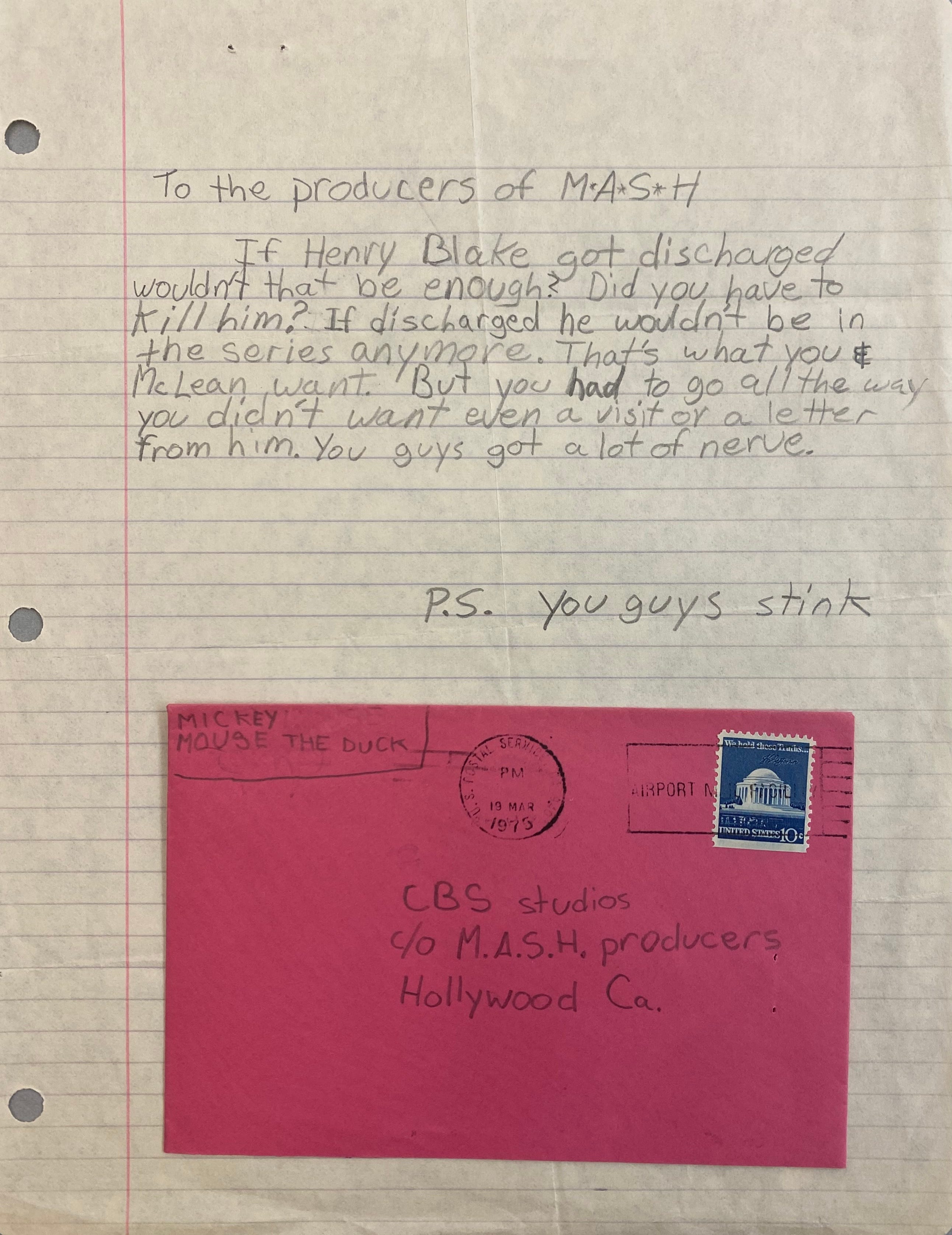
I remember sitting in the quiet archives center reading room in the basement of the National Museum of American History, opening up the manila folder and beginning to read through the letters. I set up my appointment to see the M*A*S*H Collection over a month earlier, as the collection is housed off site and had to be delivered to the archives center. The archives team was more than gracious to me, and I would not be doing this project without their help.
Now early July, I began to flip through the letters, hand-written on various stationary, until the unmistakable sight of a child’s handwriting came into view. I think Brian’s letter was the 4th or 5th in the first folder (folder 22), and reading it stopped me in my tracks. I know I’m not the only one who would react that way after reading “I am really sad” and “age 11” in such short succession. It had never occurred to me that these letters, of course, would also have been written by children.
I was 17 when I watched the episode, and even going into it with Henry’s fate pre-known to me (the follies of the digital age where spoilers are readily available, as well, I suppose, as the nearly half a century of cultural consciousness on the topic) it was still devastating to the point of heavy tears. How then, must a child of 11 have felt? Not only in watching a beloved (if fictional) friend die so suddenly, but then having to wait until the next season (which would not air until September, perish the thought!) These were questions I found myself asking, and though the idea of tracking down these children (now adults) would not occur to me until a few letters later, I figured this letter’s author would be a perfect narrative start for this project...
Photo Credits:
Screenshots from The New York Times Timesmachine, 03/18/1975, page 1 & 75.
Script photo by The M*A*S*H Historian, whose article is very good: https://themashhistorian.com/2025/03/03/script-spotlight-42/
Smithsonian Online Virtual Archives (SOVA): “M*A*S*H Television Show Collection, 1950-1984, undated, Archives Center, National Museum of American History.” https://sova.si.edu/record/nmah.ac.0117?s=0&n=10&t=C&q=NMAH.AC.0117&i=0#summary